Medtech / devices

Former PayPal and Yahoo Executives leverage tech to help seniors age in place
AgeTech World speaks with Chatta TV CEO Paul Slaughter on how Chatta TV came to be and how it helps with social isolation.
Researchers have developed a new robot that catches elderly people as they start to fall. Scientists have developed the Mobile Robotic Balance Assistant (MRBA) or ‘Mr. Bah’, which looks like a motorised wheelchair. The device has guard rails that come up to a person’s hip and are outfitted with sensors to judge when a person [...]
A new device can detect Alzheimer’s disease in the blood up to 17 years before any symptoms start to show. The device uses immune-infrared sensors that detects the protein biomarker amyloid-beta misfolding. Amyloid-beta plays a central role in the pathogenesis of Alzheimer and has been postulated as a potential biomarker for the disease. The study, [...]
The UN Environment Programme (UNEP) platform now identifies which age groups are exposed to bad air at any given hour in a country. The platform, developed in collaboration with Swiss technology company IQAir, uses real-time crowd sourced data from public governmental sources, citizens, research and satellite data to deliver estimates of localised air quality of [...]
TakingCare Personal Alarms has launched a new digital alarm to help elderly people in the wake of the digital phone line switchover. The digital alarm is the first in the UK with two multi-network SIM cards to ensure instant connectivity in case of a mobile network outage. The device uses a roaming algorithm to automatically [...]
A new report found that the average life expectancy of Americans fell at its lowest in nearly 100 years. How can technology help? In 2021, the average American could expect to live until the age of 76 which represents a loss of almost three years since 2019, when Americans could expect to live 79 years [...]
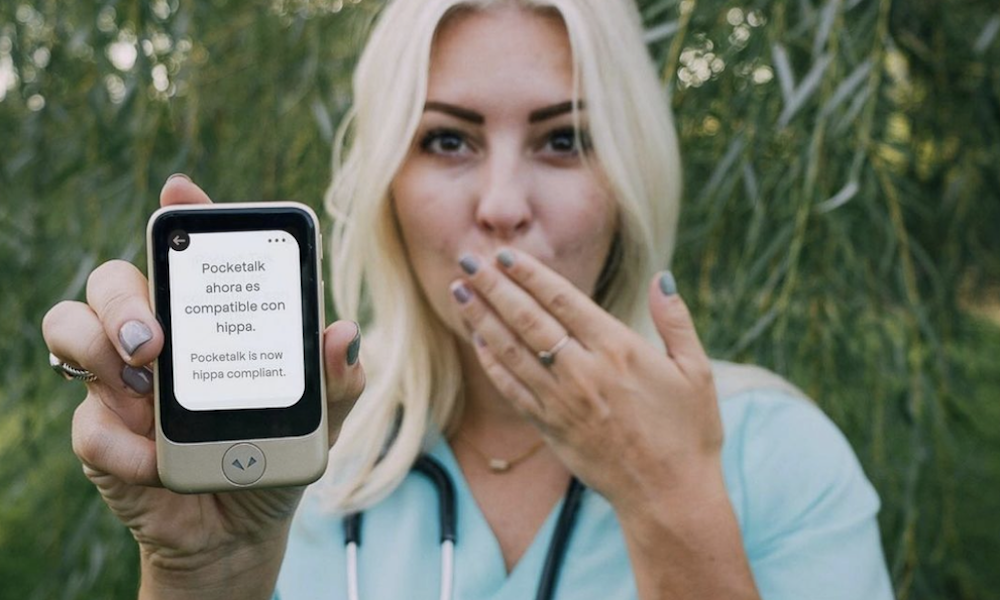
AgeTech World meets Joe Miller, Pocketalk general manager, to explore how healthcare providers can overcome language barriers. Hospitals and other healthcare providers are facing a growing challenge to meet the changing communication needs of the UK’s increasingly diverse population. Around one in 10 people in the UK don’t speak English as their first language. This [...]
A new study has found that older people feel comfortable and included in NHS digital services. Despite fears that older people may be forgotten in the face of new technology, researchers from Gemserv proved the opposite. They quizzed 2,000 patients across the UK and examined attitudes towards accessing NHS services over two years after the [...]
AgeTech World sat down with Nadim Yared, CEO of CVRx, to explore how the brain can play a major part in treating heart failures. In the UK, heart failure affects about 900,000 people with 60,000 new cases annually and is predominantly a disease of older people, according to NHS England. Heart failure is condition that [...]