A new report explores the benefits and limitations of wayfinding technology for people with blindness, deaf-blindness, visual impairment or low vision.
Navigating an unfamiliar place is uniquely challenging for people with disabilities.
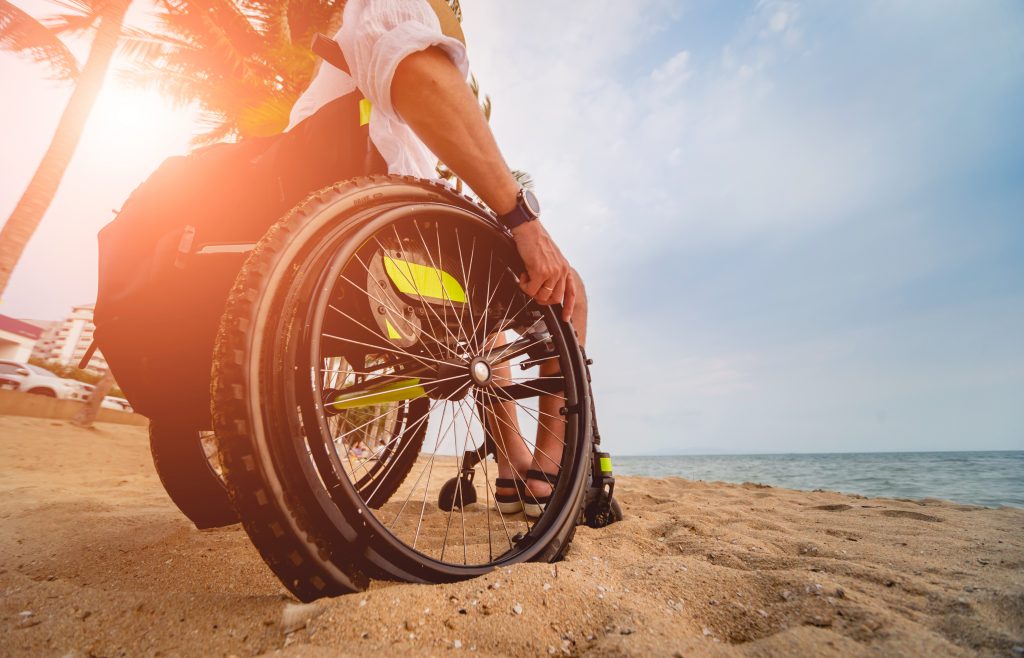
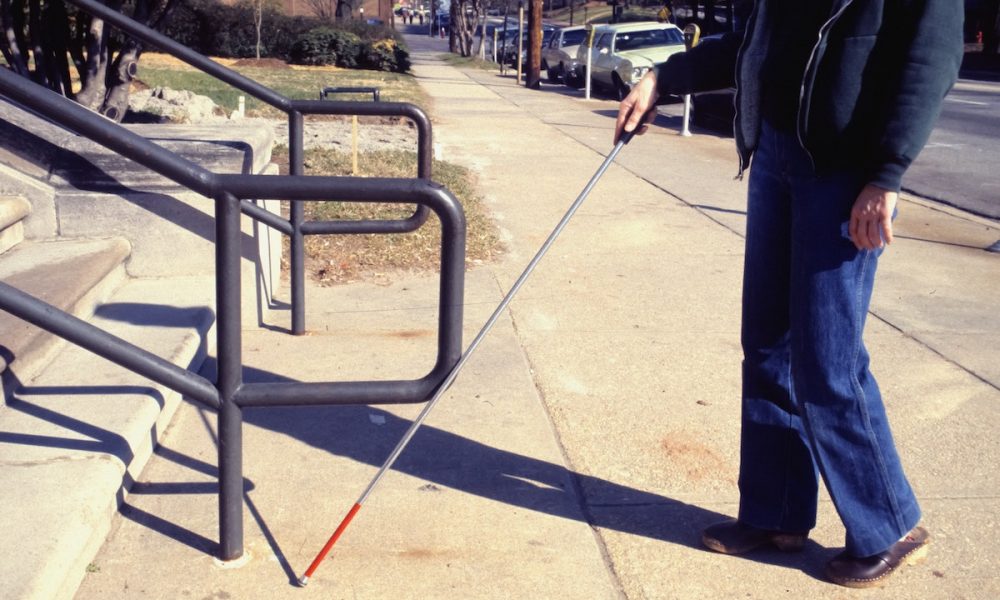
People with blindness, deafblindness, visual impairment or low vision, as well as those who use wheelchairs, can travel more independently in urban areas with the aid of effective wayfinding technology.
The report, from the National Institute for Transportation and Communities (NITC), explores how to leverage low-cost methods to enable people to more easily move through public, urban indoor and outdoor spaces.
Environments and wayfinding tools that support safe, confident mobility have been linked with improved employment outcomes, more access to higher education, and better quality of life.
However, despite the proliferation of wayfinding apps that are meant to benefit travellers, the effectiveness of such tools remains limited, according to the paper, which gave voice to the experience of diverse travellers who use wayfinding technologies to accomplish important life tasks.
Researchers Martin Swobodzinski and Amy Parker of Portland State University used focus groups, two case studies, and an in-person structured wayfinding experience on the PSU campus to find the most helpful ways of getting around.
The results from this study improve understanding of how people with visual impairment and blindness find their way through the world.
Tactile maps were found to be a very useful resource, with an accessible mobile app also showing promise as an orientation and mobility aid.
Findings from the study
Participants were invited to partake in a series of wayfinding tasks, navigating three short routes on campus with both indoor and outdoor elements.
Accompanied by an experimenter with professional experience in Orientation and Mobility, participants were asked to travel two different routes while using one of two possible wayfinding supports: a tactile map for one route, and the GoodMaps mobile app for the other.
A total of 28 people participated in the main data collection phase of the study and completed the experiment: 21 adolescents (between the ages of 14 and 18) and seven adults.
While data analysis is still in progress for the 28 participants, early findings from the two case studies indicate that the tactile map afforded the most effective wayfinding support. The immediate next step for the research team is consolidating individual-level data for each of the 28 participants, and coding and assessing their observed wayfinding behaviour and performance.
The research team also conducted two focus groups, one with eight blind or visually impaired adults who did not have any hearing loss, and another with nine deafblind participants who use Tactile American Sign Language or close-range visual American Sign Language.
Collective themes from the two focus groups included both the hope and promise of wayfinding apps for offering greater environmental literacy during real-world travel, and the limitations of using such apps.
Both groups expressed the need for apps to be designed in collaboration with travellers with visual impairments, because of the apps’ unique limitations in dynamic travel conditions.
A specific theme that emerged amongst visually impaired travellers was that they have to use multiple apps to complete a single route, because each app is useful for a subset of wayfinding tasks.
Supporting better understanding and standards
Researchers say they hope the analysis of the data will drive forward a better understanding of the needs of visually impaired, blind, and deafblind pedestrian travellers.
They are hopeful that the insights from the study will support the development of standards and innovation in mobile wayfinding as it relates to the integration of indoor and outdoor wayfinding, and routing for visually impaired, blind, and deafblind pedestrian travellers.