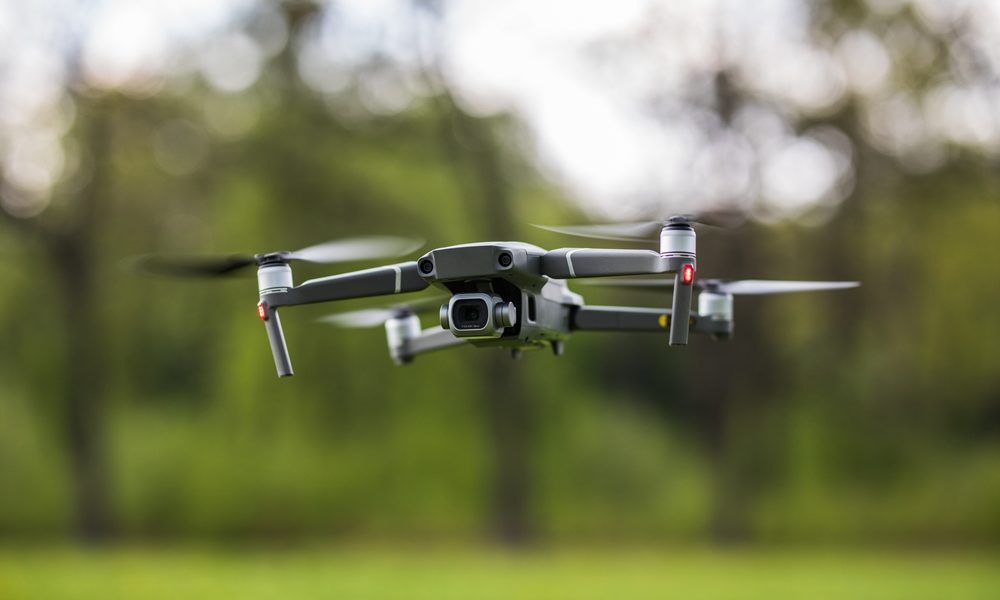
NHS drones could soon deliver defibrillators to cardiac arrest patients more quickly than ambulances, with trials showing they may cut response times in rural areas.
Researchers at the University of Warwick tested a drone delivery system in countryside locations.
Backed by the National Institute of Health and Care Research, the trial found drones could deliver defibrillators in under 10 minutes from the first 999 call.
The study set up a drone base in a remote area.
Volunteers were instructed to dial 999 when they encountered CPR mannequins simulating collapsed patients.
A control centre dispatched a drone carrying a defibrillator, which flew to the scene, hovered, and lowered the device on a winch.
Call handlers guided volunteers through resuscitation and use of the defibrillator. On average, less than 10 minutes passed between the emergency call and the first shock being given.
Dr Christopher Smith, the chief investigator, said: “Ambulance services work as swiftly as possible to get to patients who have suffered cardiac arrests.
“However, it can sometimes be difficult to get there quickly. AEDs [automated external defibrillators] can be used by members of the public before the ambulance gets there, but this rarely happens.
“We’ve built a drone system to deliver defibrillators to people having cardiac arrest, which could help save lives.
“We have demonstrated that drones can safely fly long distances with a defibrillator attached and maintain real-time communications with emergency services during the 999 call.
We are in a position where we could operationalise this system and use it for real emergencies across the UK soon.”
Every year, less than one in 10 of the more than 30,000 people in the UK who suffer a cardiac arrest outside hospital survive.
A cardiac arrest, often caused by a heart attack, is when the patient’s heart stops.
Defibrillators – devices that shock the heart back into rhythm – can more than double survival chances if used quickly.
But ambulances in rural areas often face delays on winding roads.
The project involved the Welsh Ambulance Service and autonomous drone specialists SkyBound.
Larger trials will now assess whether the technology can be rolled out nationally.
Stephen Kinnock, a health minister, said: “I want Britain at the forefront of this technological revolution to transform patient care.
“Drone technology has the potential to help reach patients faster, especially in rural communities.
“This government is backing our country’s leading scientists to research, test, and develop new forms of emergency healthcare which have the potential to save lives.”
Similar drone systems are already in use in parts of Denmark and Sweden.