AI tool detects heart disease before symptoms appear
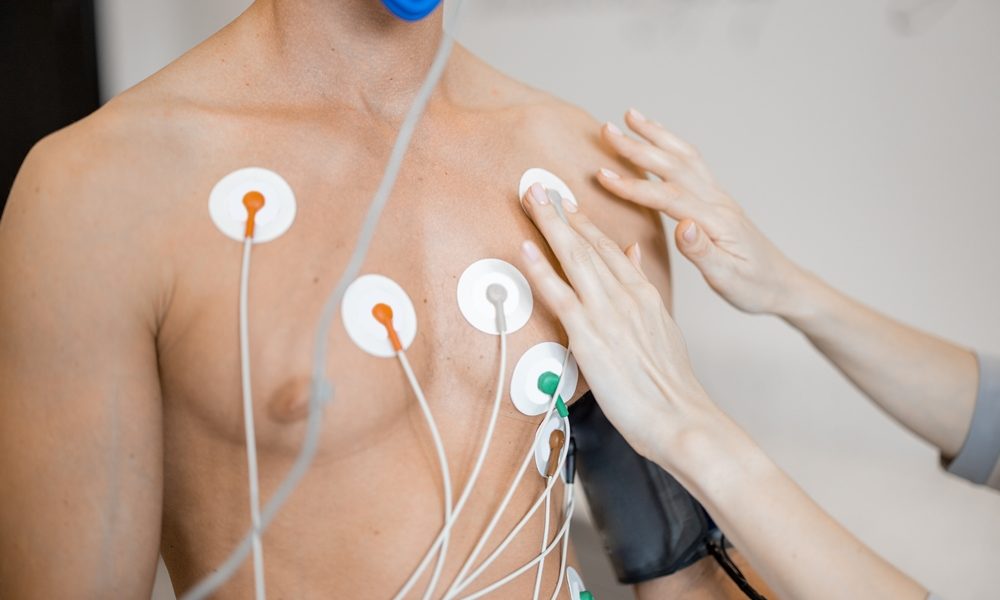
Artificial intelligence may help identify hidden heart disease in people without symptoms, using a 10-minute test that records the heart’s electrical activity in three dimensions.
The system uses five electrodes – four on the chest and one on the back – to gather signals, which are processed by AI to generate a colour-coded risk score: green, amber or red.
Unlike traditional two-dimensional electrocardiograms (ECGs), which record the heart’s electrical signals to detect abnormalities, this 3D method offers more comprehensive analysis of the heart’s function.
The study, led by Dr Simon Rudland, visiting professor at the University of Suffolk, assessed the German-developed Cardisio test in 628 individual cases.
Results showed a positive predictive accuracy of 80 per cent and a negative predictive accuracy of 90.4 per cent, with fewer than 2 per cent of tests failing.
An independent consultant cardiologist reported a strong association between red results and referrals to cardiology clinics.
Dr Rudland said: “These are early days, and we need to do more work with more patients to go through the algorithm, but this is an exciting test.
“Using digital technology to support patient diagnosis has the capacity to really change care pathways, helping to make referrals that are more appropriate or more specific to a patient’s problem – as well as initiating treatment in a primary care setting rather than placing someone on a waiting list, and establish which patients need to be referred to hospital.”
The AI tool analyses heart rhythm, structure and perfusion – the flow of blood through heart muscle – using large data sets that would be difficult for a clinician to interpret manually.
Cardiovascular diseases affect the heart and blood vessels and can lead to heart attacks, abnormal rhythms and heart failure.
Early detection in people without symptoms but considered at risk could help reduce severe outcomes and relieve pressure on hospital services.
The study focused on asymptomatic adults identified as at risk of cardiovascular disease.
Researchers concluded the test “afforded high-risk, hard-to-reach individuals access to a test more effective at identifying underlying cardiovascular disease than a traditional 12-lead ECG”.
A pilot scheme may now be launched in Suffolk or north Essex specifically focused on women, Dr Rudland said.