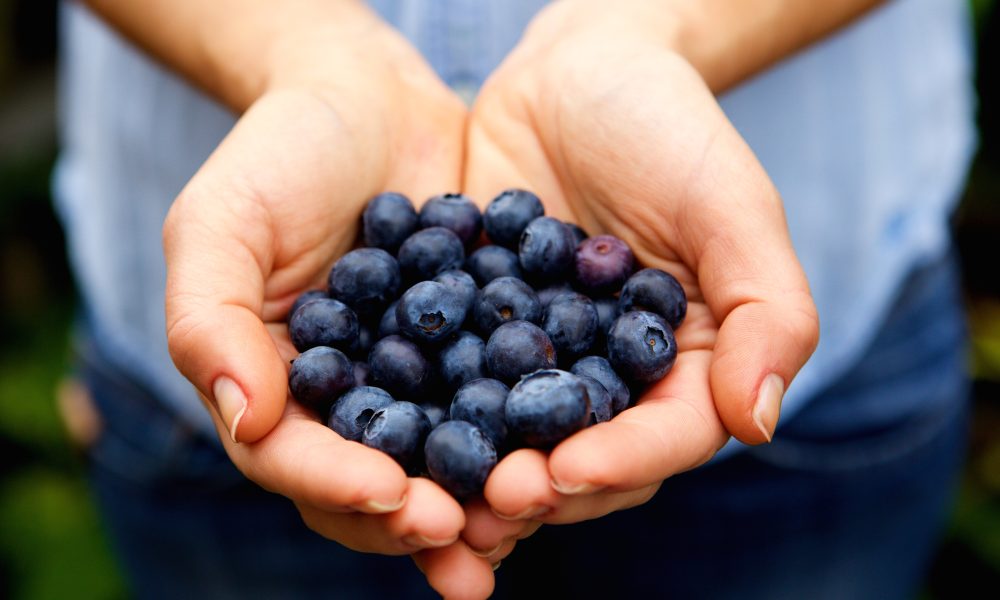
Wild blueberries could play a vital role in helping improve brain function and lowering blood pressure in a healthy older population.
New research from the King’s Faculty of Life Sciences and Medicine suggests that eating a handful of the blue or purple berries every day has a range of positive health benefits, including lowering blood pressure, faster reaction time, and improved memory and brain cognition.
The study led by researchers from King’s and the University of Reading and published in the prestigious American Journal of Clinical Nutrition, involved a randomised, double blind, placebo-controlled trial of 61 healthy men and women between the ages of 60 and 85.
One group drank a beverage made with 26g of freeze-dried wild blueberry powder – the equivalent of 178g of whole berries – with the remaining participants consuming a matching placebo.
The first-of-its-kind study evaluated evidence gathered over a 12-week period, with the volunteers who consumed the berry powder in drinks found to experience better memory and an 8.5% improved performance on an attention task.
This test group’s blood pressure was also significantly lower (3.59 mmHg) than for those taking the placebo, in addition to having an increased flow mediated dilation (FMD) of 0.86%, which is a biomarker of cardiovascular disease risk and good function of the blood vessels.
Dr Ana Rodriquez-Mateos, reader in nutrition at King’s College London’s Department of Nutritional Sciences, says the study – funded by the Wild Blueberry Association of North America – suggests that a daily intake of these small, fleshy fruit could help lower people’s risk of cardiovascular disease by decreasing blood pressure and improving blood vessel function.
She said: “We know from previous research that there are potential advantages from consuming blueberries, but this study went further by exploring how a daily and dietary achievable measure of blueberries could benefit our cognitive and cardiovascular health simultaneously in a health older population.
“We think the blue pigments in blueberries, the anthocyanins, which are a type of polyphenols also present in other foods such as strawberries, red grapes and purple vegetables, are behind these effects as increases in their metabolites were seen in the urine of the volunteers after 12 weeks consumption.”
Professor Claire Williams, Chair of Neuroscience in the School of Psychology and Clinical Language Sciences at the University of Reading, added: “It’s clear from this study that consuming wild blueberries is beneficial to cognitive function, as well as vascular health.
“The group who had the wild blueberry powder showed signs of better memory and greater mental flexibility when completing cognitive tasks.
“This is consistent with what we already know about the health benefits of anthocyanin-rich foods. It points to an important role of polyphenols in healthy ageing.”
This latest study builds on a growing body of evidence that eating wild blueberries can have a positive effect on thinking, reasoning and remembering.
But whilst other studies have shown improvements from wild blueberry consumption in brain function and heart health in compromised populations, these latest results were shown in healthy adults too.
Wild blueberries are native to North America and thrive in the acidic, nutrient-poor soils of mountainous areas and pine barriers in temperate and glacial climates, ripening between July and August.
Long known as a superfood thanks to their antioxidant properties and multitude of minerals, they are part of the plant group that also includes cranberries, bilberries and huckleberries.