



AgeTech World meets with Zeinab Ardeshir, pharmacist and founder of PillSorted, to discuss how digital pharmacies can help the older generation.
With approximately 63,000 employees and a market value of around £21 billion, the UK pharmaceutical sector is expected to have an annual growth of 3.6 per cent.
Like any other sector, pharmacies are moving to digital as there has been an exponential growth of internet users who made online purchases. In 2020, 87 per cent of UK internet users made online purchases, against a 78 per cent in 2018.
Digital pharmacies have become transactional e-commerce models that specialise on the patient – pharmacist relationship.
“NHS is right now spending more than £18 billion on medicines,” says Zeinab Ardeshir, founder of PillSorted. “More than 60 per cent of this expenditure in the community is on the elderly people who are aged 65 or over.
“These are the people who need the convenience of delivery and they need to receive all their medications on time. They need a healthcare professional that can consult with and they can talk to when they need it.”
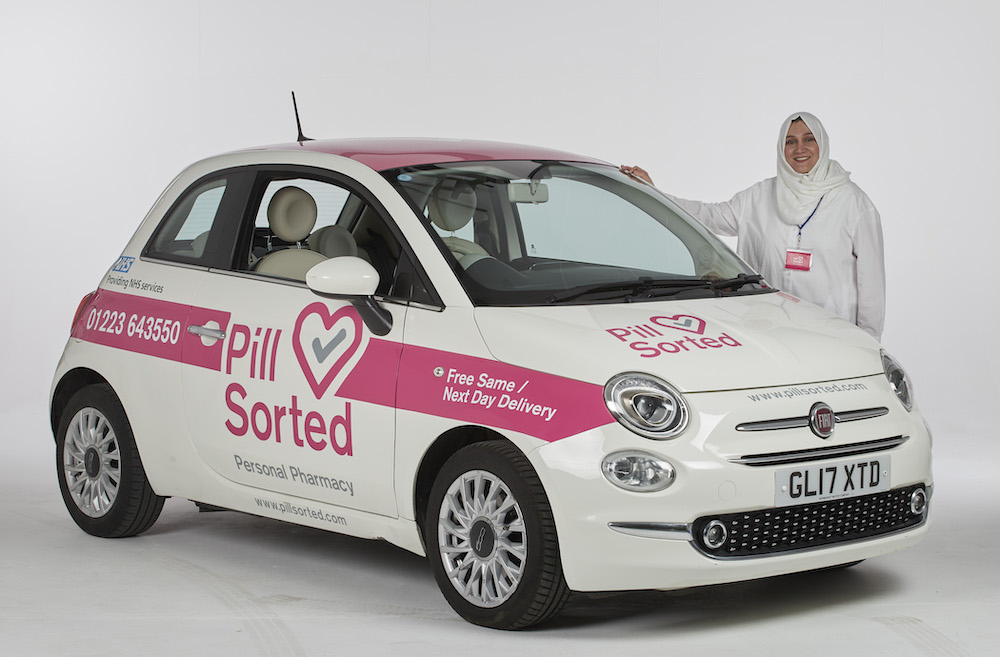
Zeinab Ardeshir with a PillSorted car
Following the fact that more than 50 per cent of people aged 65 or over “do not take their medication as prescribed”, digital pharmacies are providing them with a safe tool.
“It’s all about having the right medicine at the right time,” says Ardeshir. “If there is someone who’s at early stages of dementia, they are the ones in charge of requesting the medication on time which means that every week they have to go back and forth – either to the doctor or the pharmacy – to receive it.
Ardeshir defines this as a “huge burden that we’re putting on patients”.
The NHS is currently providing online services for the order of repeated prescriptions that users can receive using their NHS account, other online services or apps, or by speaking to their GP surgery.
“The electronic prescription system is something fantastic that the NHS has done,” says Ardeshir. “But we need a new model to solve the bigger problem. So, how do we rethink it if GPs don’t have enough time? How do we model a service where patients are at the centre and where the main objective is their needs?
“Using all the digital tools that we can, we need to create infrastructures that think about home deliveries, the patient needs and the accessibility of the healthcare professionals.
“And that’s what we want to do, we’re in an active project to help the NHS create that infrastructure of healthcare at home.”


